I’ve stood on Tower Bridge many times in the last 35 years and almost every time I have I’ve seen the ticket office to go inside and explore further, but I’ve always been en route to somewhere else so never found the time.
This trip we made the time for a proper visit and I have to say it turned out to be one of the most interesting and best value for money activities that we have done in London.
We booked our tickets online the day before and chose a 10.30 time slot so that we had plenty of time to get our regular gluten free breakfast at Leon on Borough High Street. From there Tower Bridge is around a 20 minute walk (possibly should have been less but we took a wrong turn somewhere – user error on Google Maps!).
We headed for the line which started near the North Tower on the West Side. It was slightly confusing as there was a line to buy tickets, one for pre-booked and another that appeared to be for groups. We found the one for the current time slot and were shown straight through to the ticket office where we were greeted and given a map which turned out to be really helpful on showing us what we could see and where.
We headed up some stairs and were soon inside the North Tower. Around the staircase and In the hallway before you enter there is some information about the history of the bridge and the names of the people responsible for its design and build. There is also a trail for children which involves collecting stamps as they walk around. I must admit I was tempted!
We walked down the East walkway first which offers great views towards Butler’s Wharf and Canary Wharf beyond. There are small parts of the windows that slide open so you can get photos without glare. Something I hadn’t known before is that when the idea for the bridge was being discussed, the design of the bridge was put out to competition and the winning design was the one that was built. A short video showed some of the other entries, it was strange to imagine what some of the other designs would have looked like in the same location.
The winning design was changed slightly before the build as it was thought that the materials should match those used on the nearby tower of London. Towards the centre of the beam a panel of flooring has been cut out and replaced with thick layers of glass so that visitors can see the traffic and pedestrians below.
I sometimes suffer with vertigo and at first I was unable to stand on the glass panel, it just felt so strange. I kind of hovered around the edge with a bunch of other people clearly having the same issue. I watched with envy as kids sat down on the glass and peered down at the traffic below. Then we figured out that the mirrored ceiling above the panel was for taking selfies so that you could see both yourself and the view. As this involved looking up instead of down, I was able to do this with less of a feeling of falling.
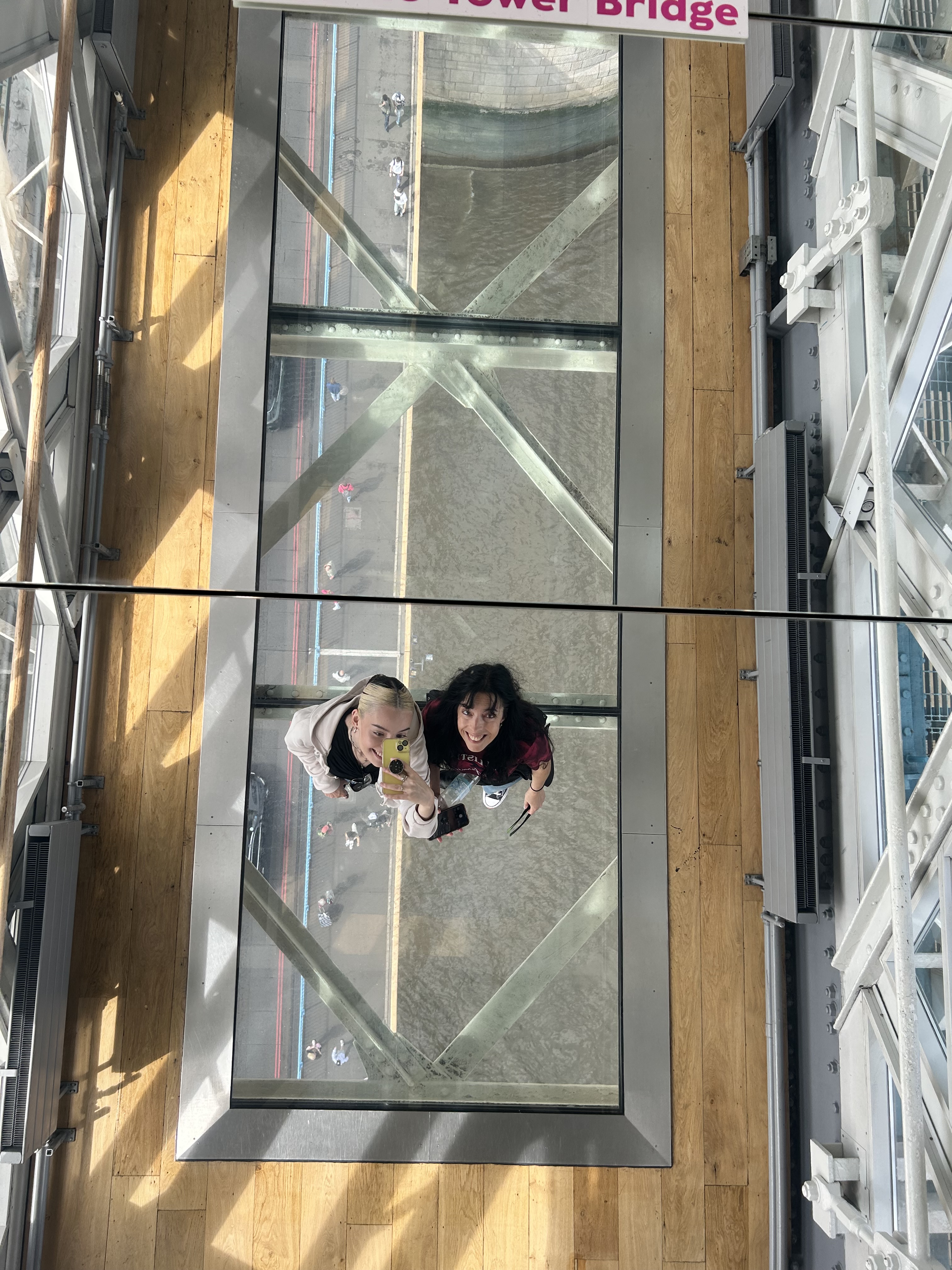
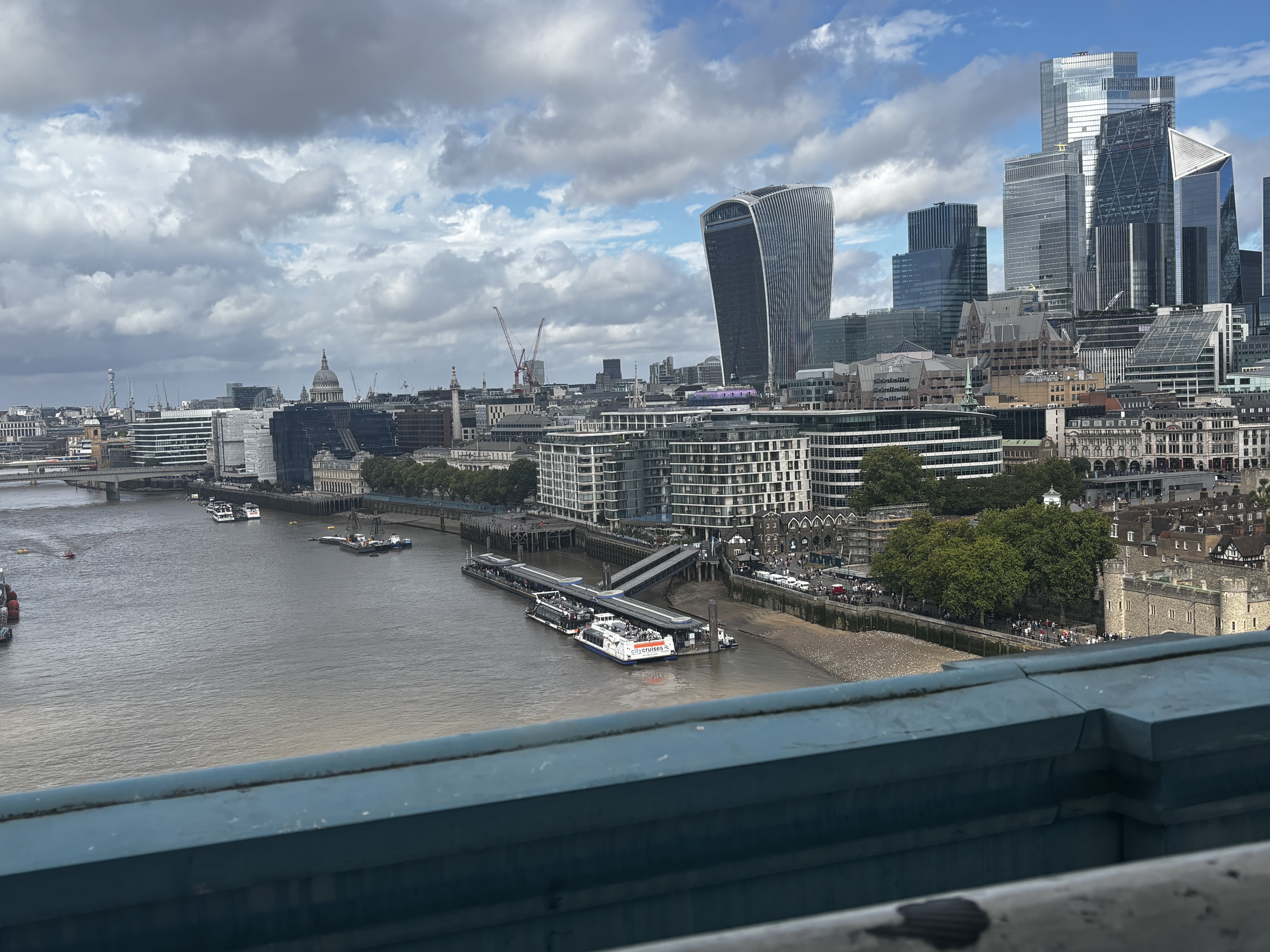
At the end of the first walkway you come to a sort of foyer that connects the two towers and you can then walk back down the other walkway which faces the West. This one has the same mirrored ceiling and glass panel set up for more photos – I was fully walking on it and looking down at the cars below by this point!. This side offers a great view of the more recognisable buildings of the London skyline as well as the nearby Tower of London, HMS Belfast and City Hall looking towards London Bridge (Tower Bridge is sometimes confused with London Bridge for some reason). The display cases here hold examples of the materials used to build the bridge including a handful of the 13-14 million metal rivets used to hold the bridge together.
The door was closed at the other end of the West walkway so we had to double back on ourselves to get the foyer and staircase to get back down stairs. The map directs you to the Engine Room Museum which tells you more about the history and workings of the bridge. You have to come back outside, and then take a set of stairs to get to the bank below the bridge. There are footprints on the floor to point you in the right direction. The engine room contains all the original mechanical elements of the bridge. You can see the furnace and the pistons and how it all fits together to ensure the bridge could open and close efficiently. The engines on display are the original steam engines that were in operation until the bridge switched to electrical power in 1976.
At the height of the Thames being used as a main trading channel the bridge would have been opening up to 30 times per day, now the average is 2-3 times. I have been lucky enough to see it open once – probably some time in the ’90’s!
I thought that one of the most interesting parts of the museum was the video featuring accounts from those who worked on the bridge when it opened. Each had a different role in making sure the bridge operated efficiently. At its busiest time it took a team of 80 people to keep it running smoothly. It seemed like there was a great sense of community and a real pride at having the privilege to work on such an iconic landmark.
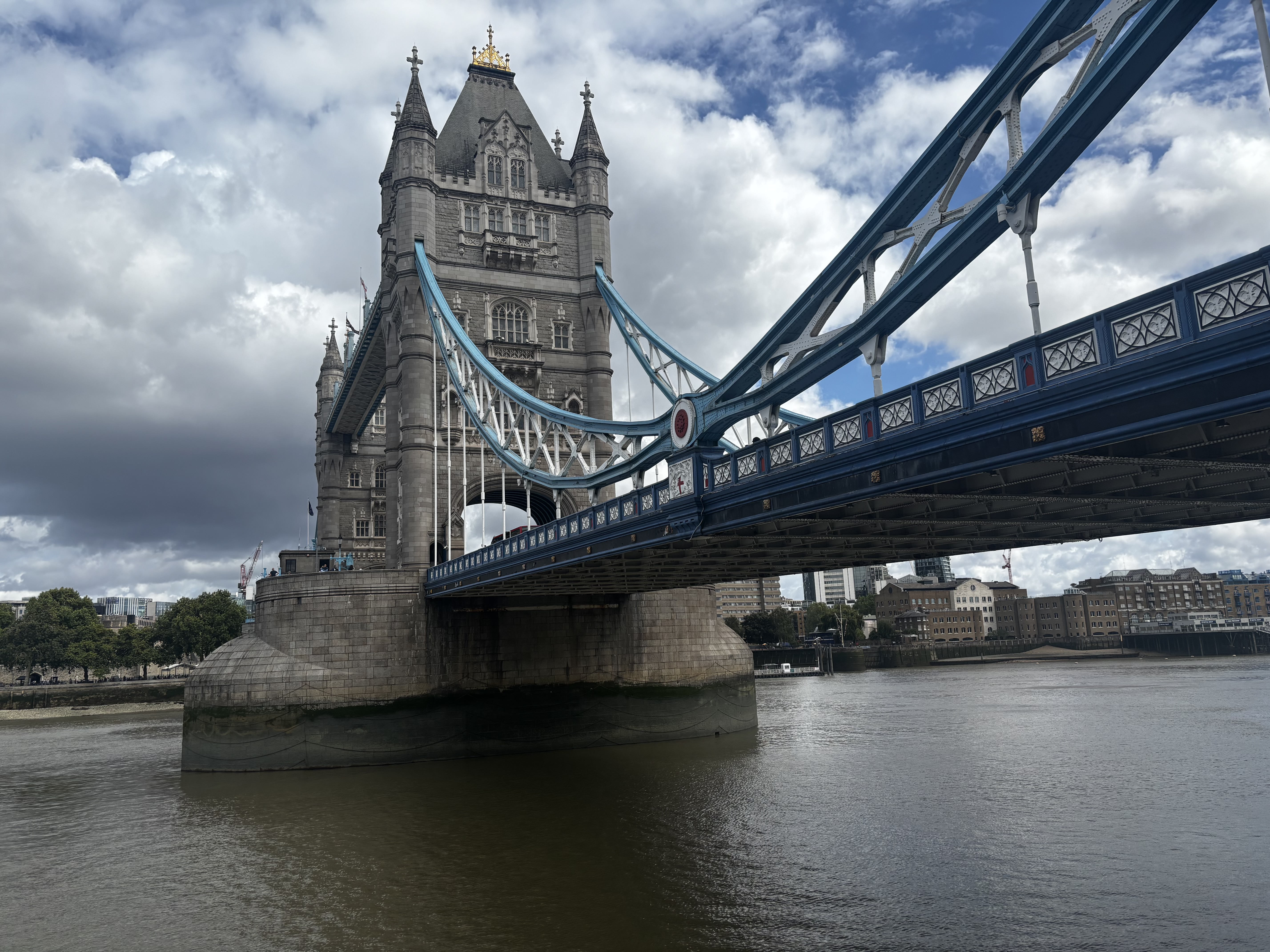
People still travel from all over the world especially to see the bridge making it one of the most photographed landmarks in the world.
We booked a timed entry ticket with unlimited time and at the time we visited we were able to take things at our own pace and there weren’t too many people around at all so we were able to spend plenty of time looking at everything we wanted to see.
If you want a more personalised, in depth experience, there are also 90 minute fully guided tours available which give access to other areas not available not the basic ticket.
In my opinion this is one of the best value attractions I have visited in London, with entry and time spacing being comfortable, organised and not over-sold. We paid £16 each and spent a good couple of hours at the attraction.
Note – I suffer with migraines that often come in the form of vertigo (with or without the head pain). I felt fine walking over the glass panels after the initial feeling of falling had subsided, however within about an hour of leaving the attraction I felt quite dizzy and had to take medication. It could have been a migraine that was coming on before the attraction and just a coincidence, as I am still not certain of all my triggers – but worth keeping in mind if you are a sufferer. (If you are wondering how I ride rollercoasters, the answer is I use anti motion sickness medication.)
 compass and coaster
Leave a comment