This walk took us just over an hour each way and then we spent around half an hour sitting on the beach, taking photos etc, so you should allow for a half day activity unless you plan to spend longer on the beach.
We were staying at the Northern point of Corralejo this time so could easily access the start of the path which is located behind the large car park to the back of the bus station on the main road (Ave Juan Carlos I).
The road looks like a dirt track which is exactly what it is, but it is the main car route to the town of Majanicho. Popcom Beach (known as Playa Del Bajo De La Burra) is roughly half way between the two towns. If you wanted a longer day you could continue on to Majanicho which also has a beach and would take approximately another hour on foot from Popcorn Beach.
At the start of the route, at the back edge of the car park there is an information board telling you which direction you are headed and giving an overview of the route. Mobile signal was good all the way up so was able to have the route on Google Maps anyway to see how far we were along.
On the day we walked there were plenty of other walkers, runners and cyclists around. There were also a lot more cars then we were expecting, in both directions and some of them were travelling at a rapid speed. Make sure to walk facing the oncoming traffic and step into the side when you can as parts of the track are quite dusty and that dust gets in your eyes when the cars disturb it.
The volcanic landscape is unusual and interesting. The road undulates and is slightly uphill but never particularly steep. About a third of the way up there are two round craters out of the ground with what look like underground tunnels attached. These are defensive casemates built during the Second World War.
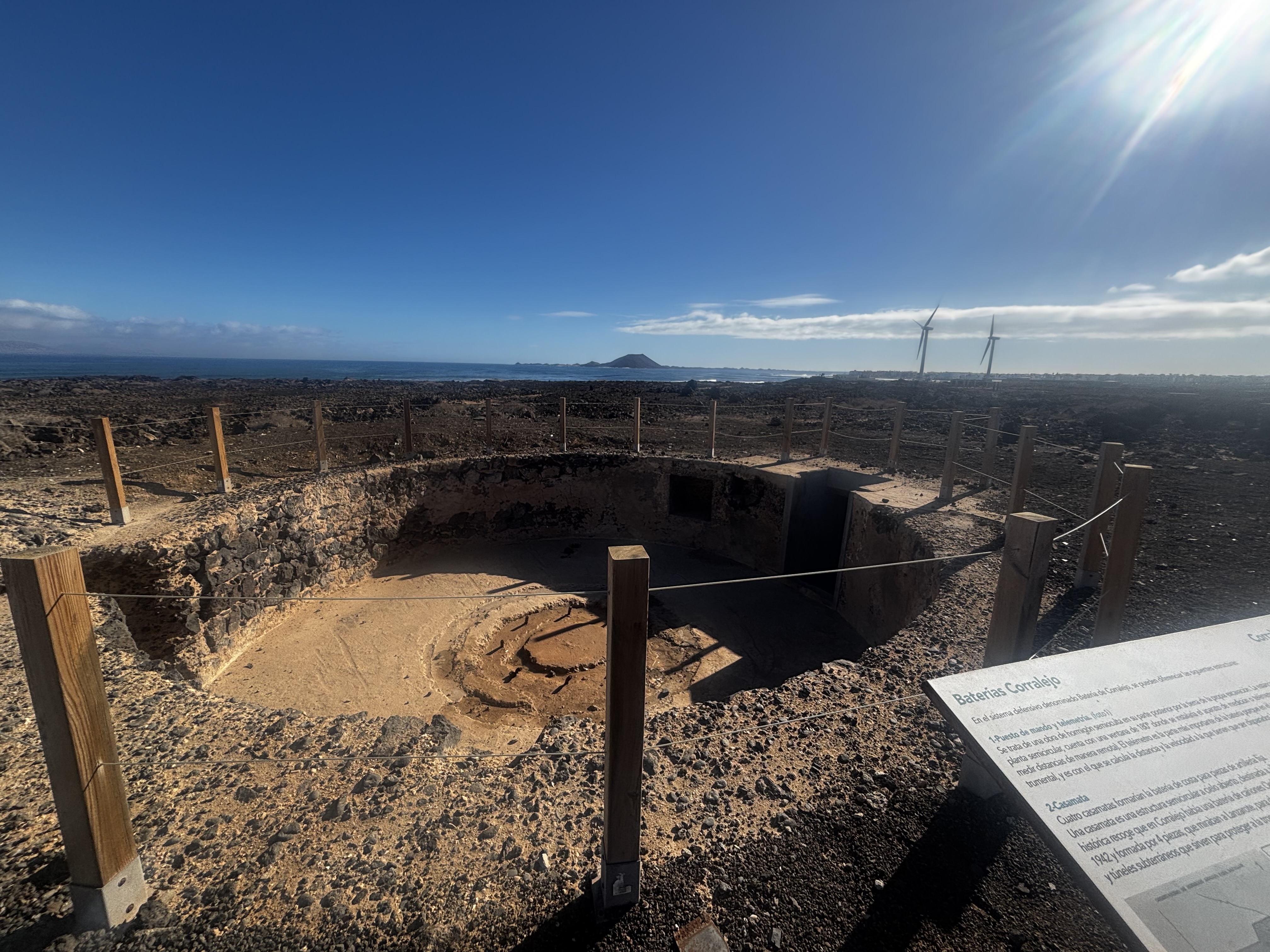
Nearby, there are information boards explaining the role of the Canary Islands in WWII. Hitler and Franco had reportedly planned to attack Gibraltar which was British territory. Winston Churchill planned to occupy the Canary Islands as part of the allied defence strategy. Their place in the Atlantic and proximity to Africa made the islands a desirable territory to capture. The dug out casemates once housed cannons that were manned in defence of the island against the potential allied occupation attempts.
The cleaning up of these casemates is being carried out by Red Electrica the local electrical supply company whose building you will see opposite the first area of casemates.
The other building, nearest the coastline, which has wind turbines in the grounds is the salt filtration works. The giant turbines power the desalination process to supply the island’s drinking water.
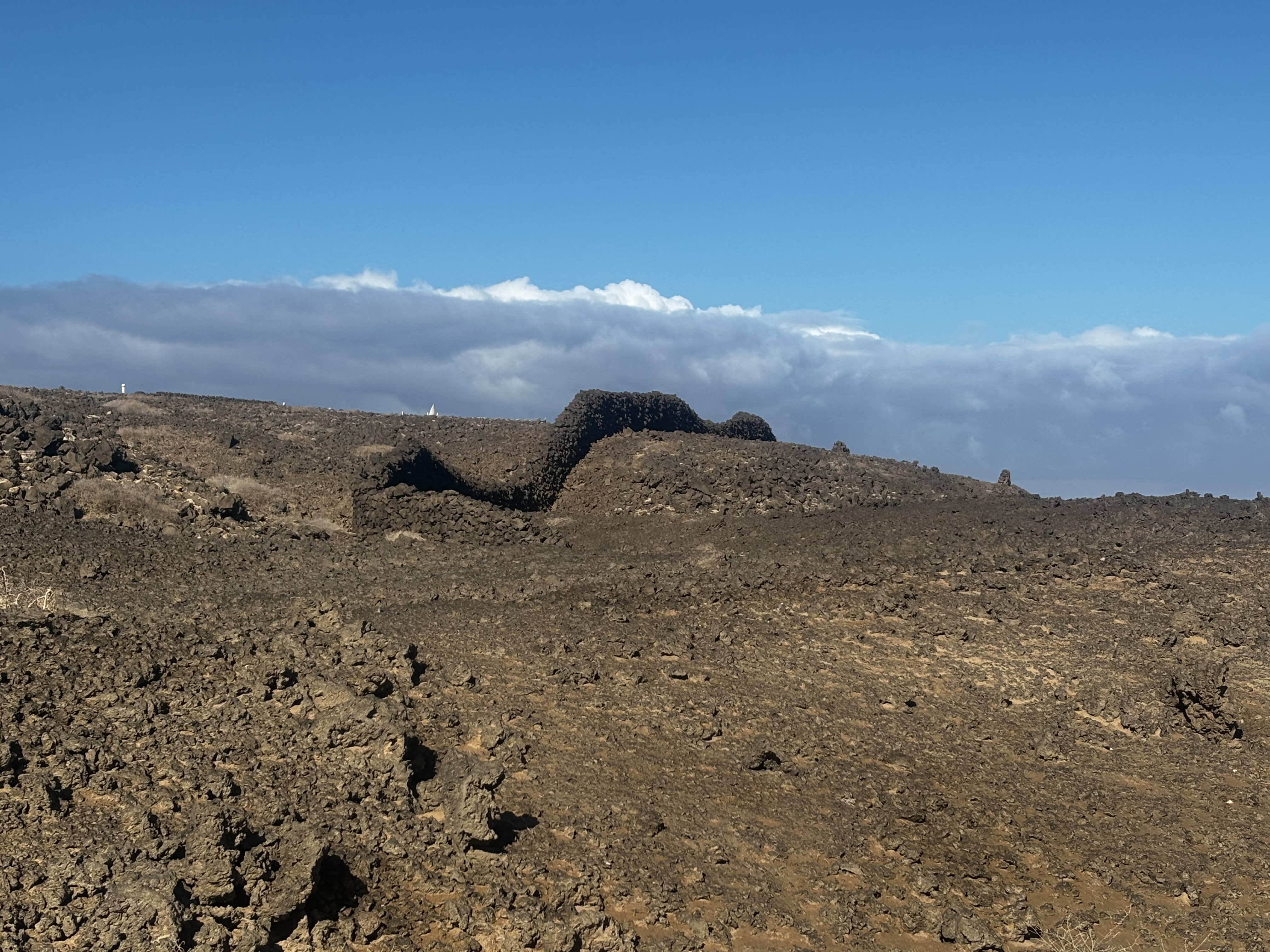
At various points there were also parts of dry stone wall that had been erected using the volcanic rock. A little bit of googling tells me that these may be remains of a larger wall that once ran the length of the island, splitting it in two.
Across the water you can see the Islands of Lanzarote and Lobos, the ever present neighbours of Fuerteventura. Both can be visited by ferry/boat. Lanzarote is well worth a day trip – the crossing takes around 30 minutes. You dock into Playa Blanca and can spend a day on the beach, sampling the restaurants, bars and shops. There is also a waterpark – Aqualava – which is open all year round if you are visiting during the Winter months as the waterpark in Corralejo closes between the beginning of November and end of March. We plan to make the trip to Lobos on our next visit.
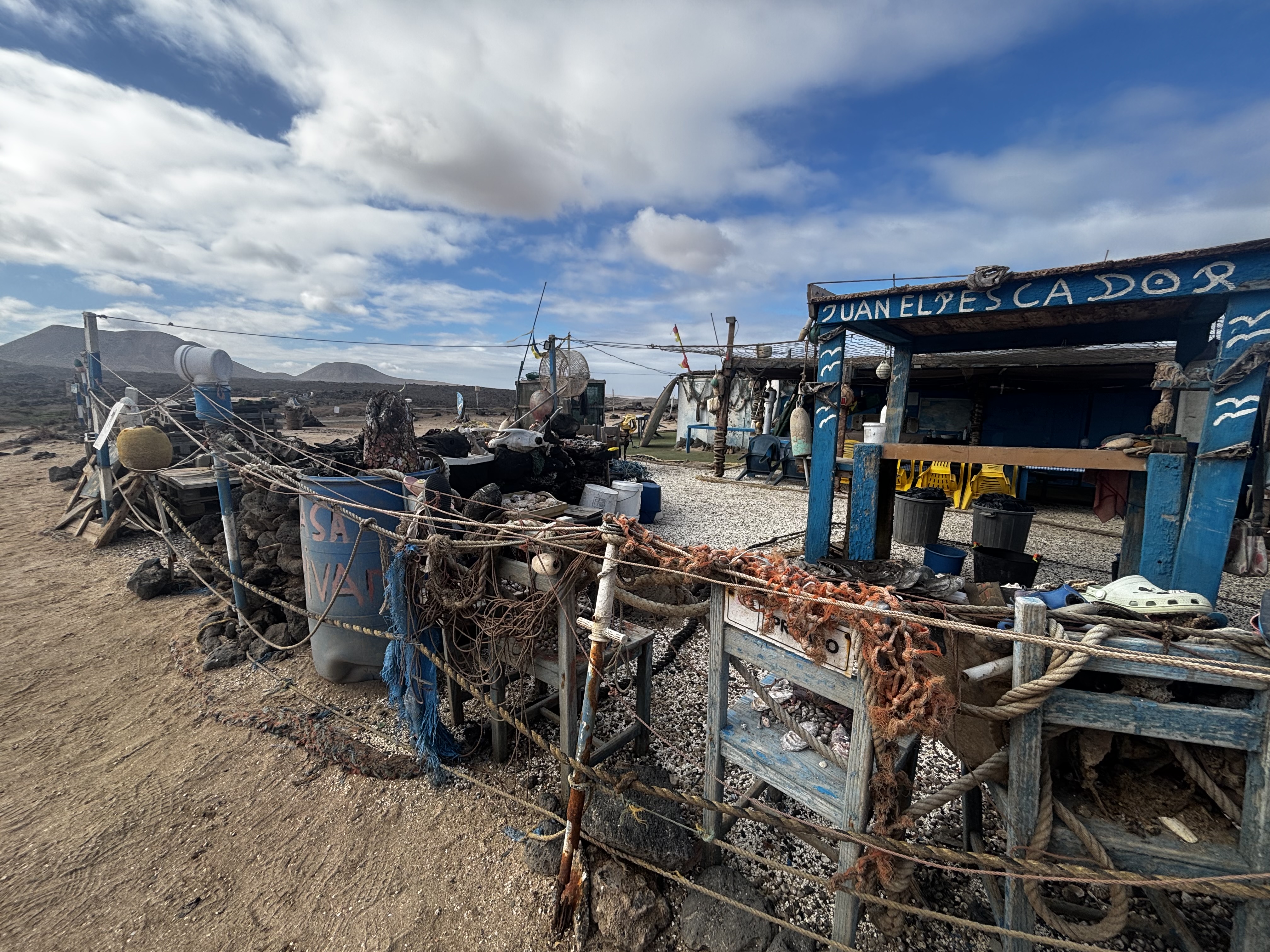
As you approach Popcorn Beach you will see a small car park and an outbuilding known as Fishermans House (Casa De La Pescador) This is a traditional old finca style building with fish heads and fishing equipment outside. There are a couple of tables and seating within the boundary of the house but these don’t appear to be used – I believe the building was once a restaurant that is now closed. The place smells very strongly of fish and we also encountered a cat that took a shine to my husband (who, is very much not a cat person!).
The beach itself is very small and surrounded by rocks. The sea was very choppy (we visited two days after a storm and things hadn’t fully calmed down). The first thing you notice is the large red flag signalling no swimming. The waves are pretty brutal and there is no safe space to enter the water.
There isn’t that much actual popcorn on the beach as the area is quite small however it is quite fascinating to see it close up. The ‘popcorn’ that is referred to is formed from calcified algae called Rhodoliths. The organism grows in the ocean and is washed up on the beaches and bleached white by the force of the waves. Although this beach is the one specifically known as popcorn beach you can also find smaller areas of the same popcorn along the other beaches in Corralejo.
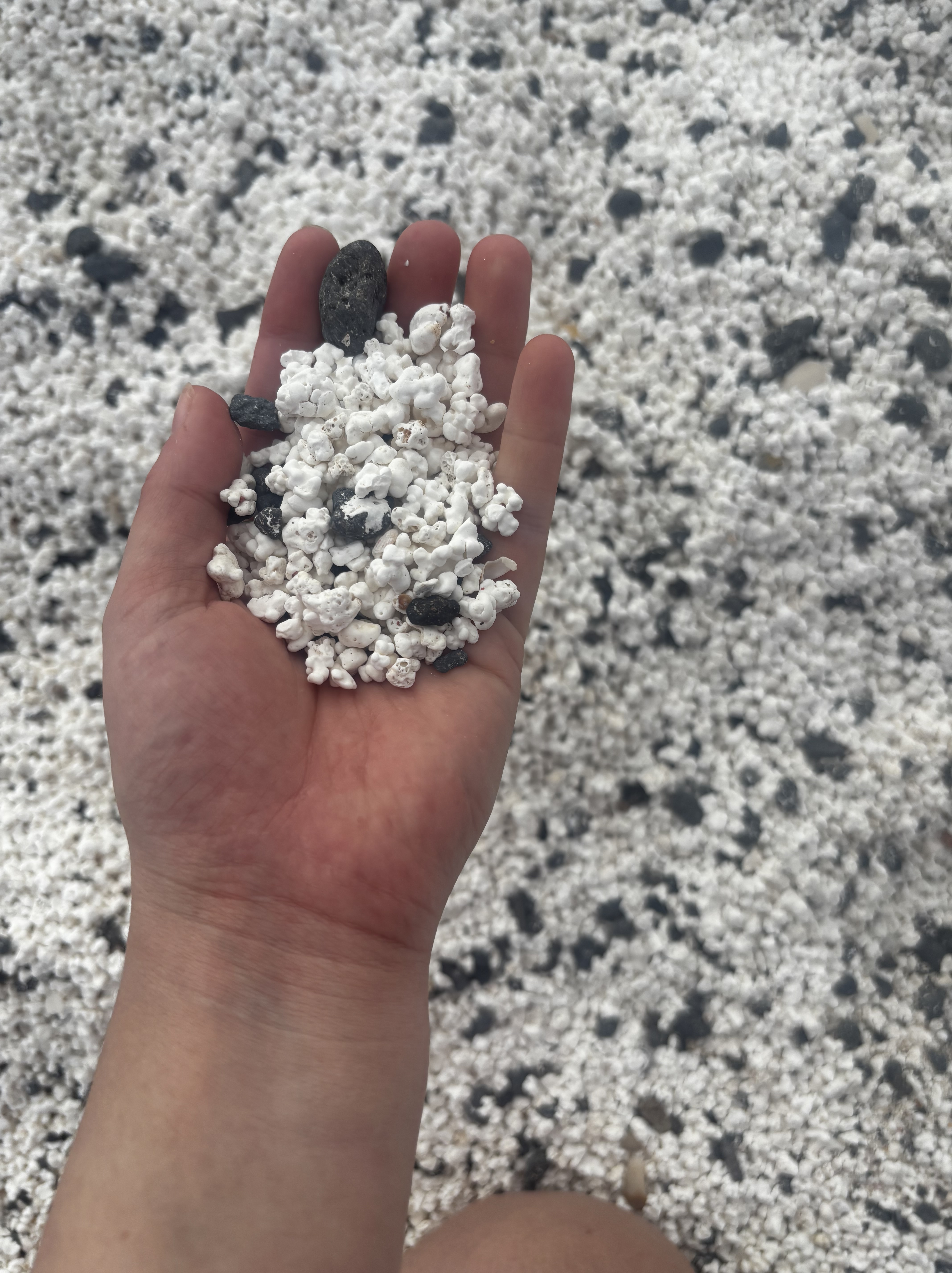
We sat down for a while enjoying the views and having a rest before taking our photos. There were quite a few people doing the same as the area has recently become popular on social media, attracting more visitors. If you are tempted to take a souvenir please be aware that removing the ‘popcorn’ is strictly forbidden – in fact it is illegal. It is a vital part of the ecosystem, providing food and shelter for many types of marine life.
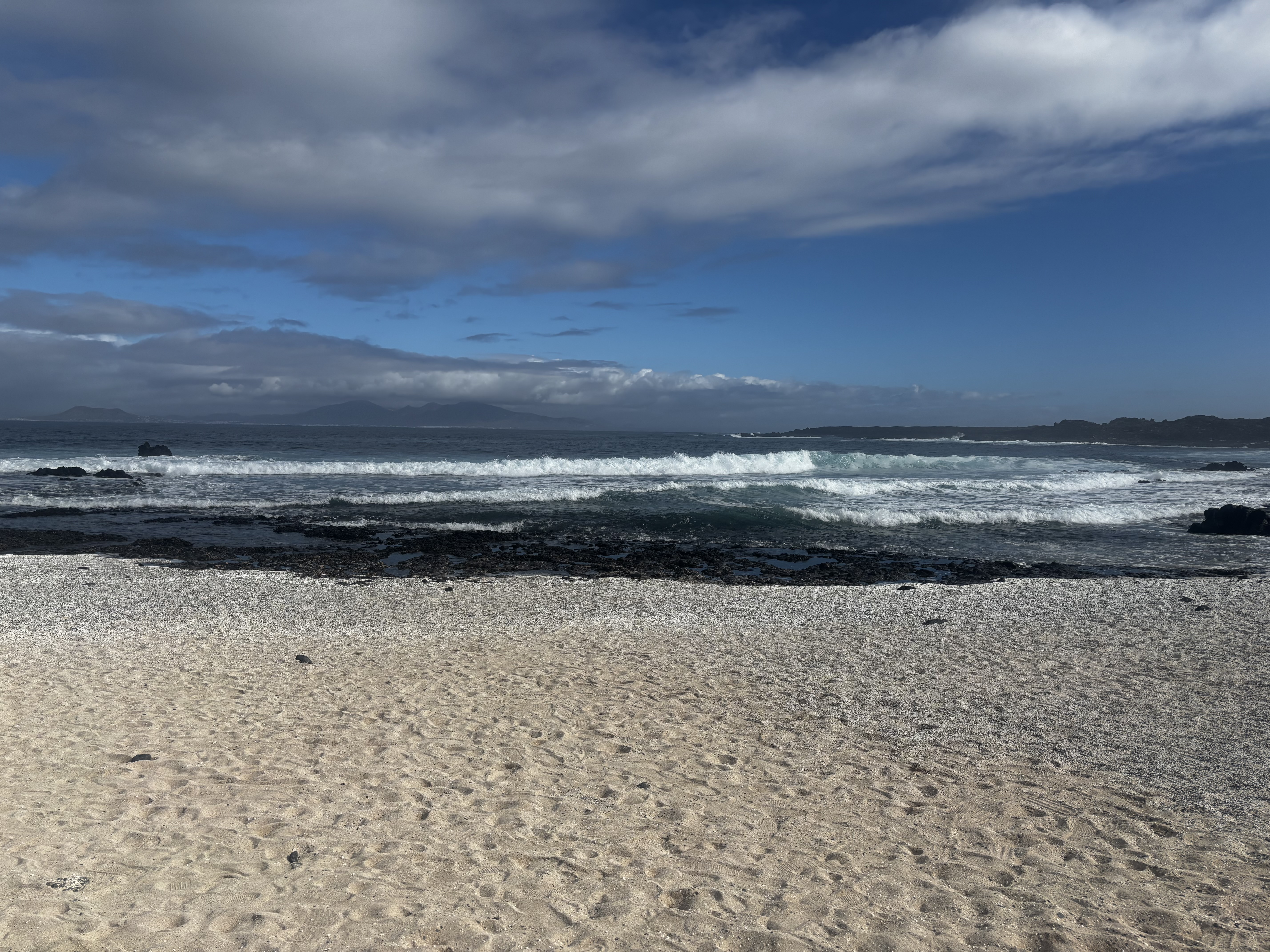
On the way back we stopped at an area where surfers were in the water and were lucky enough to witness some fantastic skill from whoever was out there riding the waves. The area also features a small cross raised up and surrounded by rocks. There was no inscription but we guessed this to be a memorial to someone who was claimed by the sea or maybe someone who had enjoyed spending time here during their life.
The walk back down was slightly easier as the opposite side of the road offered something more like a pavement so avoiding the cars was a little easier. Just before we reached the car park we also found a path that took us off the dirt road and back towards the main road where we had started so we could kind of cut the corner off. On this path we saw a couple of graceful long legged, long beaked birds that we thought were Egrets.
A very pleasant way to spend a morning and not too hot (it was November).
 compass and coaster
Leave a comment