We have visited Cardiff Castle before and looked around some rooms of the house that are included as part of the standard entry price. This time we chose to pay the £4 extra for the Castle House Tour as we were keen to see some of the additional rooms not accessible with a general ticket and hear more about them. You cant book the tour tickets online, these must be booked at the ticket office on the day and are dependent on availability. The standard tour times are published on the Cardiff Castle website.
We were lucky enough to get on the first tour of the day. We probably picked the rainiest day of the year to visit so were glad to get straight indoors. We met our guide on the upstairs terrace at the entrance to the clock tower.
There has been a fort or castle in some form on the current site dating back to Roman times. Like many Castles the structures on the site have been abandoned, ruined and rebuilt numerous times. The current owners of the Castle, the Bute family, acquired the castle by marriage in the late 18th Century. The Castle House Tour showcases the rooms from the mid to late 19th Century during the time of the 3rd Marquess of Bute.
After inheriting the fortune his father made from his successes in the coal industry the 3rd Marquess became the richest man in the world and he wanted his home in the Castle house to reflect that.
The 3rd Marquess designed the house in collaboration with renowned architect William Burges. Unfortunately neither of the two lived to see the completion of the project however further work was later completed by the 4th Marquess after his father’s death.
Each room in the house has its own theme and story to tell and our guide gave us details about the design and use of each room as we walked through the house.
We started in the Winter Smoking room with its ornate ceiling and fireplace design. Our guide explained that the design on the ceiling related to the four seasons and the twelve signs of the Zodiac.
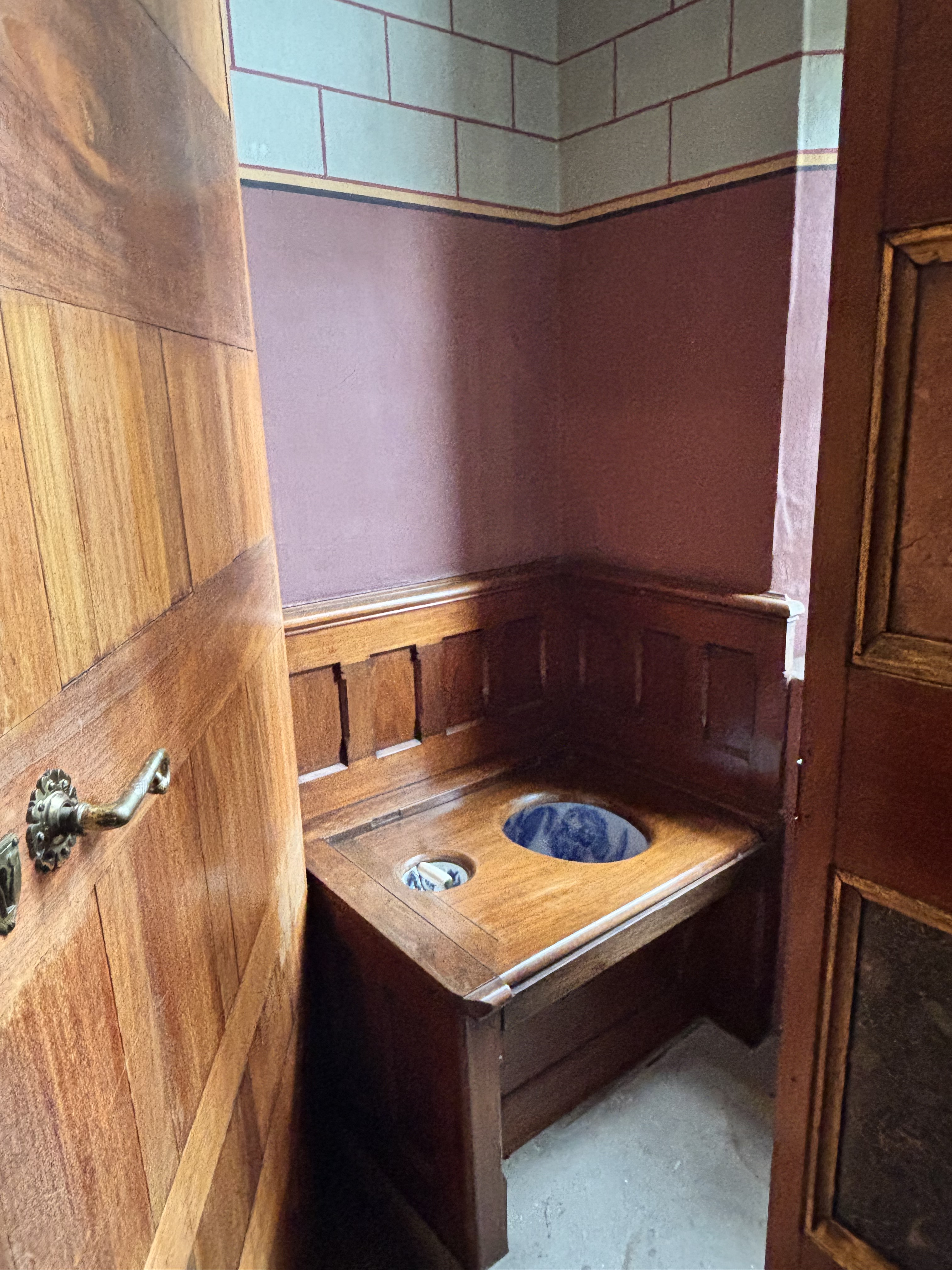
Lord Bute’s bedroom was my favourite out of the additional rooms we were shown. The screen door separating it from the bedroom includes sixty different types of marble with the name of each on inscribed on it. The toilet is a flushable bowl type which would have been exceedingly rare in the late 19th Century. We were told that it was more than likely that the waste would have been flushed directly down into the River Taff below!
The roof garden is a unique feature, I have visited numerous stately homes and castles and this is the first of its kind that I have seen. Lord Bute was a keen linguistic, speaking many languages including Hebrew. The story of the prophet Elijah is told in words and pictures around the walls of the garden. There is also a pool with fountains which are not currently in use but its easy to imagine what a wonderful tranquil space this would have been.
The Nursery has depictions of nursery rhymes and children’s stories all around the walls which we had fun trying to guess without reading the inscriptions.
We were given a brief look at the Arab room with it’s absolutely stunning ceiling carved from wood and covered with gold leaf. This room was not fully open even though it is also included with a standard ticket however we were given the opportunity to look inside from behind a rope and take pictures.
Downstairs, the Banqueting Hall tells the story of the family’s history and is still used today to host important visitors to the city. We had seen this room previously along with the library and a couple of other rooms as part of the standard entry ticket, however we were able to appreciate their significance further with the background provided by our guide which in my opinion was well worth the extra few pounds that we paid.
Our guide paced the tour really well, she was happy to answer individual questions we had and really made an effort to include every group member. We were really grateful to her for pointing out that as my daughter was currently a Cardiff resident she was entitled to a Castle Key , which means unlimited entry to the castle. She advised us to go back down to the ticket office and they would upgrade her ticket to the key. My daughter was delighted with this as she intends to come back to the castle later in the Summer with a couple of history loving friends.
All in all the guided part of the tour probably took about 45 minutes, then we were able to walk around and re-visit at our own pace.
Despite the wet weather making for a potentially treacherous climb, we went to take a closer look at what’s left of the old keep. This part is much older than the house, dating back to the early 12th Century when the current stone structure was erected to replace its wooden predecessor. Entry involves climbing some pretty steep steps with a visitor organised system of letting people come down one way before attempting the other so everyone had the space they needed. We managed this in the rain without too much trouble but if you are not so steady on your feet it may present a challenge. There are more steps inside too, to access the higher levels.
The top offers great photo opportunities. Views over the city to one side and Sophia Gardens cricket ground in the distance beyond Bute Park. We were told that Castell Coch is visible to the North on a clear day however our day was unfortunately very cloudy. The Principality Stadium looms large over the city (great venue – we saw Lana Del Rey here last weekend and will be returning for Catfish and the Bottlemen soon but sadly not Oasis!)
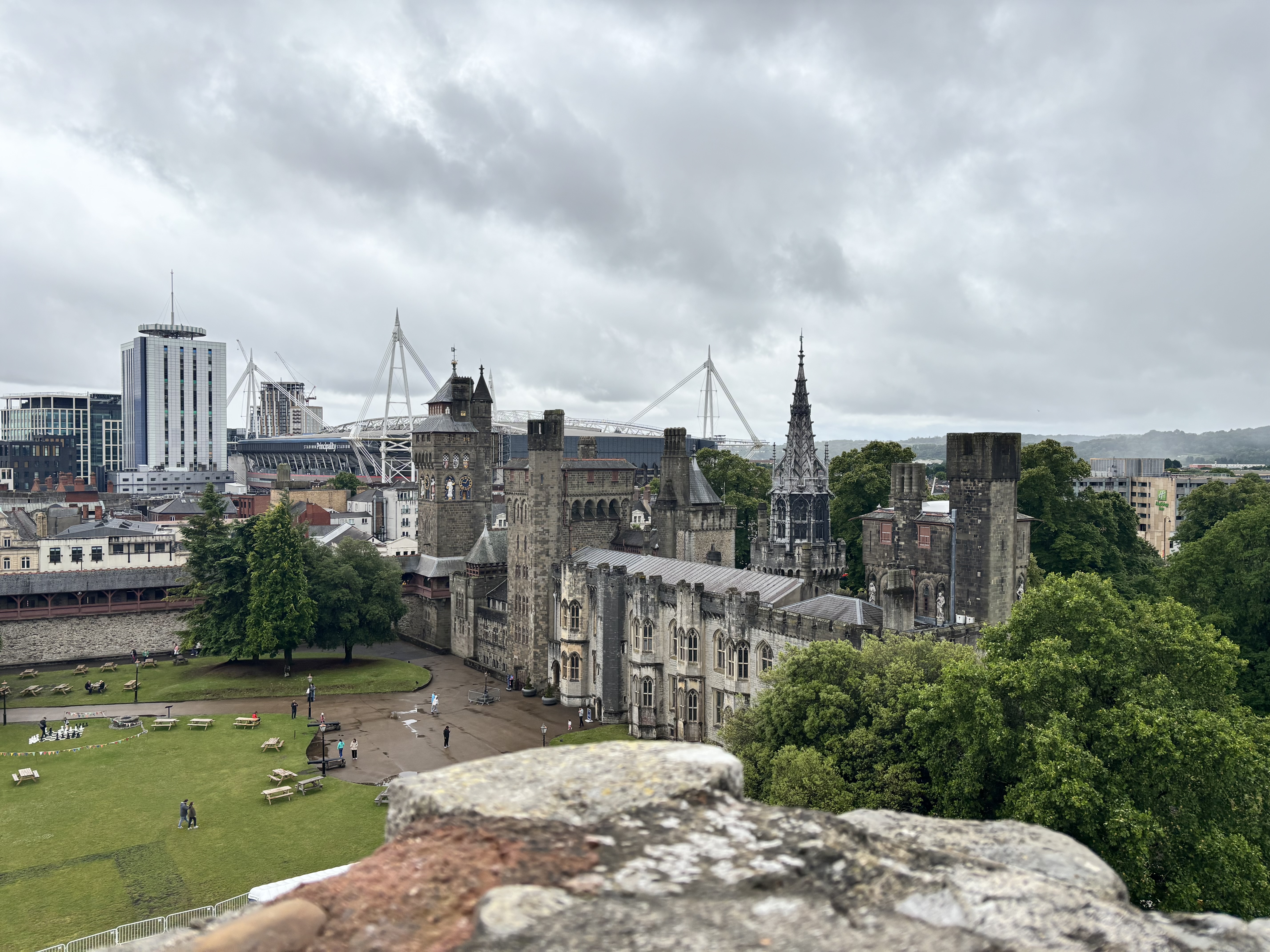
We walked some of the old Roman walls however the grounds were set up for the upcoming music festival taking place so some areas were off limits. (We will be back at the end of July to see Fontaines DC as part of the Summer Festival series.)
An interesting feature of the castle that one could easily miss if not aware is the underground tunnels that were used as air raid shelters during world war II. The entrance is located to the opposite side of the grounds from the house, back past the ticket office. Although the entrance is outside, you do need your ticket to access this area.
Upon entering the tunnels you are greeted with the booming voice of Winston Churchill making one of his radio broadcasts to the nation. The walls are decorated with posters and memorabilia from the time. There was enough space for 2000 people to shelter in the tunnels during a bombardment, which is almost impossible to imagine when stood down there today.

There are several other guided tours available but some are limited as to when they operate so its best to check the website before visiting. For example we would like to visit the other rooms in the clock tower but the tour is only available on weekends so has not been convenient on any of our recent visits. There are also the World War II and medieval tours which give the background relative to those eras.
Back at the visitor centre there is still more to see. The centre includes part of what is left of the original Roman Walls, which were excavated in the late 1800s and the Firing Line Museum offers a look back at 300 years of Welsh military history.
Afterwards we had a walk around Bute Park which was gifted to the City of Cardiff along with the Castle by the Bute family in 1947. It has the highest number of Champion Trees in any UK park, and there is a trail that you can follow to see them all. A highlight for us was the Animal Wall which runs along the boundary wall on the main road in front of the Castle. The wall features carvings of different animals at intervals along the top of the wall. They were designed by William Burgess but not installed before he died. Lord Bute oversaw their installation in the late 1800s and then more were added in 1923 when the wall was moved due to alterations to the road. If you look closely you can see that the original carvings have glass eyes.
We thoroughly enjoyed our tour and the rest of the visit and will definitely be returning to see more.
 compass and coaster
Leave a comment